





Introduction to Hospital Plans for Babies
In South Africa, there are many different kinds of medical aid to choose from. People of all ages can get medical care from companies, but you might not know which plan covers the important things your child needs.
Can You Get Medical Aid for Babies Only?

Children under the age of 18 are not permitted to be the primary members of a Medical Aid plan in South Africa; rather, they must be a dependent on an adult’s plan in order to get coverage for their medical costs. There are several circumstances that warrant an exemption from this regulation. One of these circumstances is when a parent or guardian has passed away and there are sufficient assets remaining in their estate to maintain the child’s participation in the organisation.
Whether you are a family, or a single mum looking for medical aid for you and your baby, it can be hard to choose the best hospital plan. In South Africa, there are a lot of different medical plans, and each one has its own perks and choices.
You might like the best hospital plans under R2000 per month
How to Choose the Best Hospital Plan

Think about the benefits offered as well as the amount of money that will need to be paid each month before selecting a hospital plan in South Africa. It is essential that you are aware of the following:
Join only a health plan that has a “critical mass” of enough other individuals already enrolled. This indicates that it is capable of withstanding a significant number of major medical claims, which is true of all of the plans that we include below.
Second, the hospital plans that are listed under the Short-Term Insurance Act and that are often offered by banks provide far fewer benefits than the hospital plans that are provided by Medical Aid Schemes. This is due in part to the fact that they are exempt from meeting the fundamental requirements outlined in the Medical Schemes Act, and in part to the fact that they pay greater commissions than Medical Aid Schemes do.
What should be included in a medical aid for babies?
Most plans for medical aid cover the same basic things. But when picking a plan for a baby, there are some things to watch out for:
- Day to day benefits are essential since babies are prone to catching stomach viruses and colds, both of which are easily treatable with a speedy visit to the paediatrician and some over-the-counter medication.
- Hospital Coverage – Considering the high cost of hospital stays, it is important to select a health insurance policy that provides enough coverage for such costs. You might simply only buy a hospital plan if your baby does not have any chronic diseases or if you do not need to go to the doctor very frequently.
- Try to find a medical aid plan that also covers other requirements that the baby could have, like vaccinations.
1. Bonitas Medical Scheme 
Bonitas’ Traditional series is good for families with babies, because a family get unlimited hospital cover at any network hospital, with out-of-hospital GP and specialist consultations being paid from available benefits.
Child immunisations are covered. The Standard plan covers one GP and paediatric consultation more than the Primary plan.
The Bonitas Primary option has an overall limit of R 600 000 with the option of any private hospital in SA. The day-to-day benefits are generous and independent cover will pay additional amounts charged by surgeons and anaesthetists above the NHRPL rate.
2. Discovery Health Medical Scheme
Discovery’s Smart Series is the best cost-effective option that cover the most important medical care for your baby.
The Smart Series offers Classic and Essential plans, both offering similar benefits but to different extents.
You and your baby will get unlimited GP visits and private hospital cover from providers in Discovery’s network. Cover is also available for lover-the-counter medicine.
Discovery has a Vitality programme called Vitality Baby, with which you can earn points and get rewards.
Other suitable options include:
Keycare Core
The Keycare Core is an inexpensive hospital plan with unlimited hospital cover paid at 100% medical aid rate but only available from a limited list of private hospitals. It has a chronic medication benefit as well as emergency evacuation.
Discovery Keycare Plus
The Discovery KeyCare Plus is an inexpensive hospital plan with unlimited hospital cover paid at 100% medical aid rate but is only available from a limited list of private hospitals. This is a network option, which means that you get unlimited primary care doctor’s consultations, medicines and basic dentistry is unlimited from a network of practitioners.
Read more about health insurance for children
3. Affinity Health

One of the few firms in South Africa that focuses completely on delivering medical aid to children is Affinity Health. You have the option to cover only your baby under their Affinity Junior option, which provides you with the choice between a day-to-day plan, a hospital plan, or a combination plan.
The Junior Day-to-Day option provides coverage for an unlimited number of radiological and pathological tests in addition to an unlimited number of medical visits, and your primary care physician (GP) may suggest that you select this option.
This option has a monthly cost of around R600 for the first kid, with an extra R300 required for each additional child.
The Junior Hospital plan has a monthly fee of around R900 for the first kid, with an extra R300 required for each subsequent child after that. It grants you access to private hospitals and covers the fees associated with ordinary hospital stays as well as the costs associated with medical treatments.
4. Fedhealth
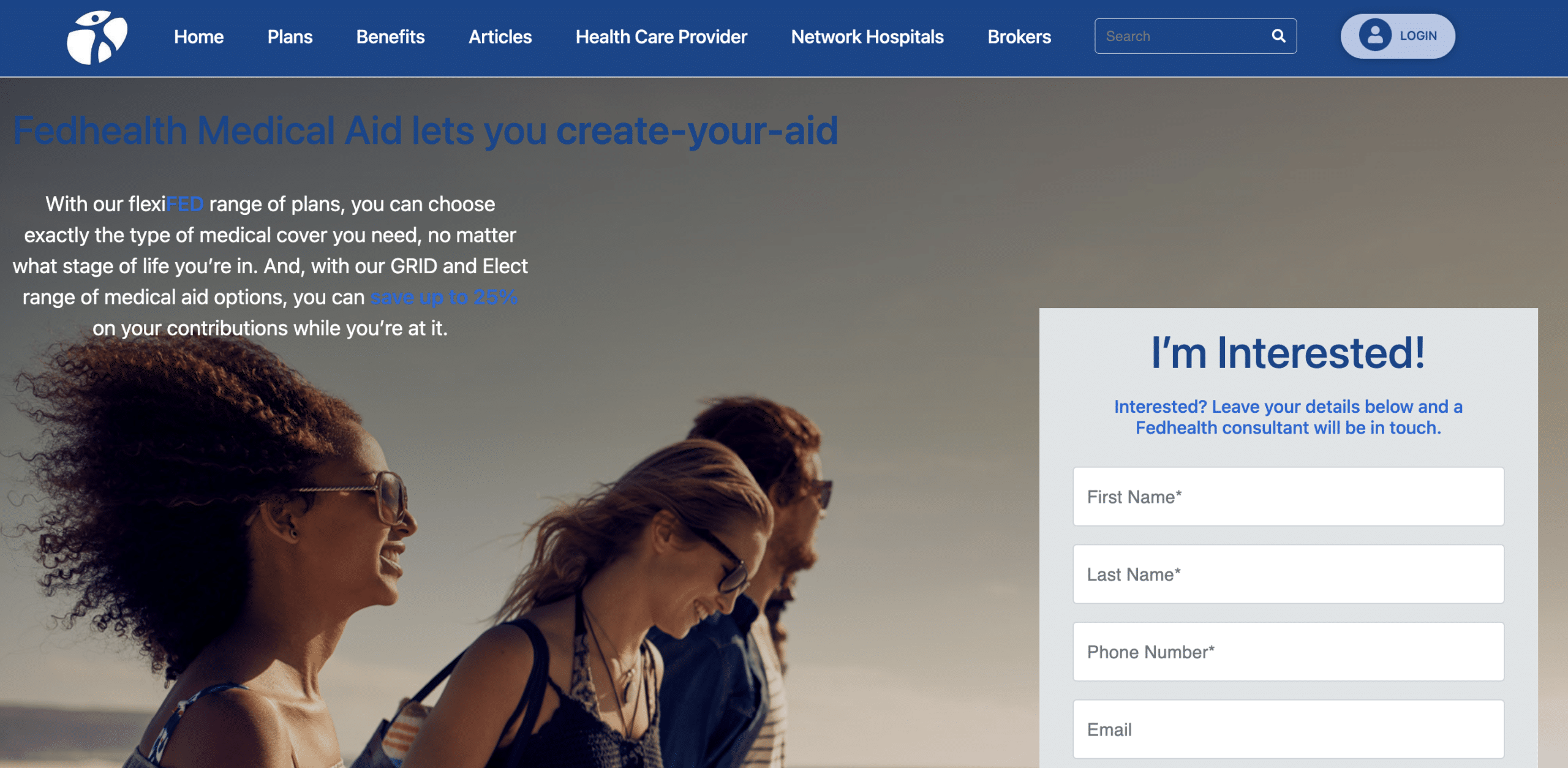
Fedhealth has three option plans that are designed for families with a baby.
The FlexiFED 2 plan is aimed at those who plan to have a first baby, while the FlexiFED 3 plan is for families with young children.
These plans offer the same benefits but FlexiFED 3 has more money in the MediVault, which gives members access to emergency funds for unexpected medical expenses.
These plans both allow for unlimited GP visits and pay hospital treatment costs for a family at Fedhealth’s network doctors. Children’s immunisations are covered from birth up to 12 years old.
There is also cover for chronic medication and emergency evacuation cover by ambulance and helicopter.
Read more about the Best Medical Aids for Covering Glasses & Optometry in South Africa
5. BestMed Medical Scheme

With help and backup from BestMed medical aid, South African families have access to more than 4,300 primary care physicians, as well as networks of hospitals and specialists.
BestMed offers significant benefits for preventative healthcare, such as contraception for women, treatment for pneumonia, vaccinations against influenza, and a variety of other options.
BestMed Medical Aid Option Plans include BestMed Hospital Plans, Network Plans, Savings Plans, and Comprehensive Plans.
Hospital Plans are popular with young families, because its coverage treatment at a range of network hospitals for planned and unplanned hospital stays. There is also a choice between the Beat1 Plan and Beat1 Network Plan that gives unlimited cover for unplanned hospital stays in the network’s hospitals.
BestMed Network Plans offer a little bit more benefits, which are appreciated by families with young babies who can afford slightly higher monthly premiums. Both the Rhythm1 and Rhythm2 Network Plans offer unlimited in-hospital cover with either limited essential day-to-today benefits, or comprehensive savings for consultations with designated healthcare providers. The Rhythm2 Network Plan is dependent on income levels.
You might also consider the reading more on the following options BestMed has to offer: