

























Gap Cover

Overall, medical expenses in South Africa can be costly, even with medical aid coverage. Gap Cover is a supplementary insurance policy that can help bridge the gap between what medical aid covers and what you actually pay out of pocket.
In this article, you will learn:
- Who offers the Best Gap Cover in South Africa (2024) – a List
- The Best Rated Gap Cover (Zestlife, Discovery, Momentum, Bonitas, Standard Bank) in South Africa – Revealed
- What is Gap Cover, and, How Does it Work?
- The Best Gap Cover for Cancer Patients, Chronic Conditions, and, more.
- The Best Gap Covers with a Short or No Waiting Period.
- Gap Cover in South Africa – a Comparison (Prices, Waiting Period, Trust Score)
and much, MUCH more!
The Best Gap Cover in South Africa – A Comparison
| 🔎 Provider | 💶 Monthly Premium | 📉 Waiting Period | 💙 Trust Score (5) |
| 🥇 Discovery Gap Cover | R143 ZAR | Up to 12 Months | 4.4 |
| 🥈 Zestlife | R225 ZAR | 3-12 Months | 4.1 |
| 🥉 Momentum Gap Cover | R219 ZAR | 3-12 Months | 3.9 |
| 🏅 Bonitas MedGap | R226 ZAR | 3-12 Months | 4.5 |
| 🎖️ Standard Bank Gap Assist | R225 ZAR | 12 Months | 4.4 |
The Best Gap Cover in South Africa (2024)
- ☑️ Discovery Gap Cover – Overall, The Best Gap Cover in South Africa
- ☑️ Zestlife – Best Comprehensive Gap Cover
- ☑️ Momentum Gap Cover – The Best Gap Cover for the Younger Generation
- ☑️ Bonitas MedGap – Popular Gap Cover for Families
- ☑️ Standard Bank Gap Assist – Best Gap Cover for Seniors

What is Gap Cover?
Gap Cover Insurance is a type of insurance that covers the difference between the amount covered by a Medical Aid plan and the amount charged by healthcare providers.
How Gap Cover for Medical Aid Works
Prescribed Minimum Benefits are the minimum benefits that Medical Aid plans in South Africa must cover by law (PMBs). Nevertheless, these PMBs may not cover the total cost of medical treatment, leaving members with cover gaps.
This cover gap is addressed by Gap Cover Insurance, which provides additional financial protection for medical expenses not covered by the Medical Aid plan. Gap Cover Insurance is typically offered by private insurance companies and is intended to supplement Medical Aid plans.
What is covered by Gap Cover Insurance?
Gap Cover Insurance covers a variety of medical expenses not covered by the Medical Aid plan, such as:
- ✅ Co-payments are a portion of the member’s medical bill that must be paid out of pocket. Gap Cover Insurance could cover these co-payments.
- ✅ Deductibles – a specific amount the member must pay before the Medical Aid plan begins to pay for medical treatment costs. Gap Cover Insurance can offer protection for these deductibles.
- ✅ Healthcare providers can charge fees above those set by the Medical Aid plan. Gap Cover Insurance can cover these expenses.
- ✅ Non-PMBs are medical costs not covered by the Medical Aid plan. However, these non-PMBs may be covered by Gap Cover Insurance.
Gap Cover Insurance covers the difference between healthcare provider fees and the amount covered by the Medical Aid plan. The healthcare provider will submit a claim to the Medical Aid plan whenever a member receives medical care.
The Medical Aid plan will pay the covered amount if the claim is approved. The member will then submit a claim for the remaining amount not covered by the Medical Aid plan to the Gap Cover Insurance provider.
If the claim is approved, the Gap Cover Insurance provider will pay out the benefits to the member. However, it is important to note that Gap Cover Insurance policies may impose annual, per-event, or per-beneficiary limits on the number of benefits that can be paid.
The Benefits of Gap Cover
The following are some of the benefits of Gap Cover:
- ✅ Can cover co-payments and upfront payments for certain medical procedures not fully covered by medical aids
- ✅ Provides additional benefits for cancer procedures, accidental death, or permanent disability
- ✅ Covers certain casualty costs that are not typically covered by medical aids
- ✅ Offers peace of mind by insuring against unforeseen medical expenses and funding any shortfalls in medical aid cover
It can serve as a bridge in cover if a person downgrades their medical aid option to a more affordable plan by topping up cover with a gap cover.

Why Do You Need Gap Cover in South Africa?
Gap coverage is optional but can provide additional financial protection for uninsured medical expenses. It may be worthwhile to consider Gap Cover Insurance if you have Medical Aid to ensure comprehensive coverage for medical care.
The Rising Cost of Healthcare in South Africa
Over the years, healthcare costs in South Africa have steadily increased, with medical inflation exceeding the overall rate of inflation. This has increased medical scheme contributions and out-of-pocket costs for medical treatment.
Furthermore, thousands of individuals discover that their medical aid coverage is insufficient to cover all their healthcare costs, leaving them with a substantial financial burden.
The Limitations of Medical Aid Schemes
Medical aid plans do not cover certain treatments and procedures, and some co-payments and deductibles must be paid out of pocket. This can result in significant out-of-pocket expenses between what the medical aid scheme covers and what the healthcare provider charges.
This is where void protection comes in. The difference between what medical aid schemes cover and what healthcare providers charge for in-hospital treatments and procedures is covered by gap protection.
Furthermore, gap cover can also cover co-payments, deductibles, and other out-of-pocket costs not covered by the medical aid scheme.
The Importance of Gap Cover for Peace of Mind
Gap cover can provide medical scheme members with peace of mind, knowing they have additional protection in case of unanticipated medical expenses.
This is especially important for those with chronic conditions or who require ongoing medical treatment, as it can help mitigate the monetary impact of recurring healthcare costs.
Chronic Condition Protection
Chronic conditions often require ongoing medical treatment and can be costly. Gap cover can provide additional cover for chronic conditions, helping to ease the financial burden of managing these conditions.
Access to Specialist Healthcare
Medical aid schemes may have limitations on the types of healthcare services they cover, such as certain treatments or specialists. Gap cover can provide cover for these services, allowing you to access the care you need without financial strain.

Additional Benefits of Gap Cover Relating to Critical Illness
Some gap cover policies offer additional benefits for critical illnesses, such as lump sum payments or cover for non-medical expenses related to the illness. This can provide financial relief during a challenging time.
Premium Waivers/Cover for when the Main Policyholder Passes Away
One of the benefits of gap cover in South Africa is that it can help cover medical aid premiums and benefits if the main policyholder passes away. This is particularly important for families who rely on the main policyholder’s income to cover their medical expenses.
In the event of the main policyholder’s death, the medical aid premiums may no longer be covered, which means the remaining family members will be left without medical aid coverage. This can be financially devastating, as the cost of medical care in South Africa can be exceedingly high.
Gap cover can help by providing a lump sum payout to the family members of the deceased policyholder, which can be used to cover the outstanding medical aid premiums and any other medical expenses.
This can help ensure that the family members are not left without medical aid coverage and can continue receiving the medical care they need.
Additionally, some gap cover policies may provide additional benefits, such as a funeral benefit, which can help cover the costs of the policyholder’s funeral. This can be particularly helpful for families who may not have the financial resources to cover these expenses.

The 5 Best Gap Cover Providers in South Africa
There are several reputable and well-known gap cover providers in South Africa. Some of these include:
- ✅ Discovery Gap
- ✅ Zestlife
- ✅ Momentum Gap Cover
- ✅ Bonitas MedGap
- ✅ Standard Bank GapAssist
Discovery Gap Cover
Discovery Gap Cover is a product offered by Discovery Health, designed to provide additional protection and financial security to members of their medical scheme. Here are some of the top features of Discovery Gap Cover:
- ✅ Provides cover for in-hospital specialist shortfalls, co-payments, and deductibles not covered by the medical scheme.
- ✅ Offers an oncology benefit that covers the shortfall between the medical scheme rate and the actual cost of treatment, as well as an additional once-off benefit for first-time cancer diagnoses.
- ✅ Provides a casualty benefit that covers the cost of treatments received in a casualty ward, including medication, X-rays, and blood tests.
- ✅ Offers a premium waiver benefit that waives the monthly premium for up to six months in case of the main member’s death, disability, or retrenchment.
- ✅ Provides a trauma recovery benefit that covers the cost of treatment received for trauma and counseling services for post-traumatic stress disorder.
- ✅ Offers 24/7 medical advice and emergency medical assistance service.
Discovery Gap Cover also provides two plans, allowing members to select the option that best suits their needs and budget. The options comprise the Core and Comprehensive plans, each with varying levels of cover and benefits.

Zestlife
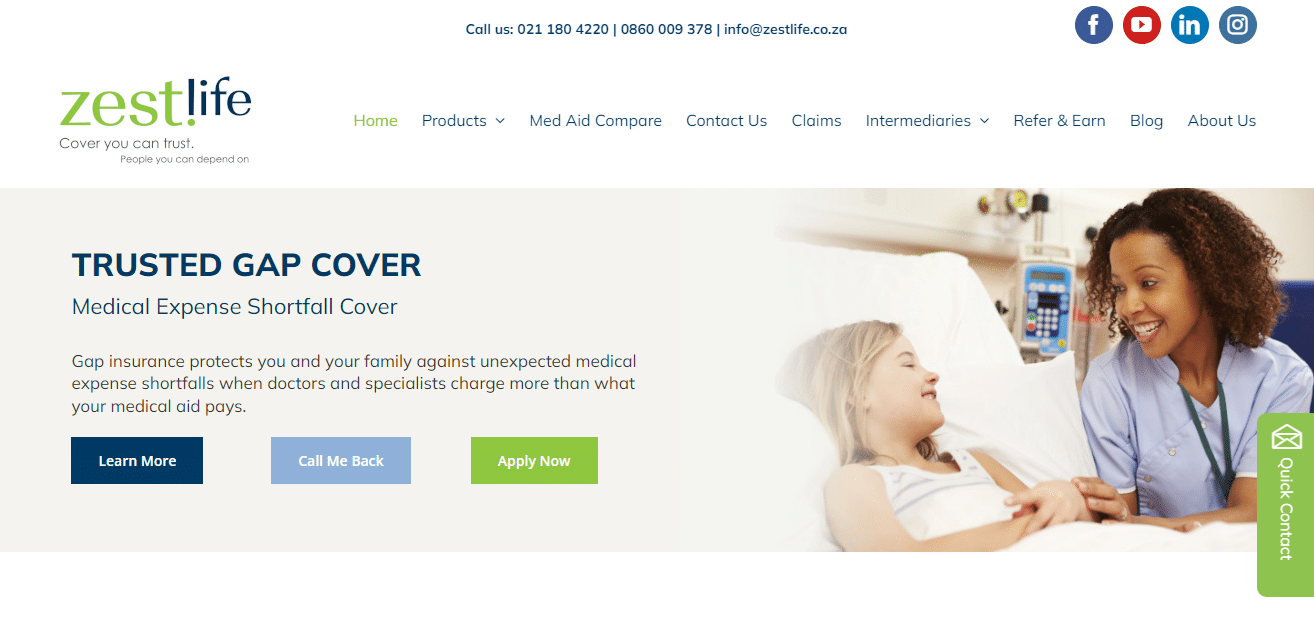
Zestlife is a gap cover provider in South Africa that offers a range of products to help individuals and families cover the gap between what their medical aid covers and what healthcare providers charge.
Some of the top features of Zestlife gap cover include:
- ✅ All Gap Policies have a regulated annual limit per individual insured.
- ✅ If the main policyholder passes away or becomes permanently disabled due to an accident, Zestlife Universal Gap Cover will cover the remaining policyholders’ medical aid and gap cover premiums for an amount of 12 times the combined premiums, up to a maximum of R110 000.
- ✅ Zestlife provides additional benefits for cancer treatment, including cover for non-PMB chemotherapy and radiotherapy and a lump sum payment in the event of a cancer diagnosis.
- ✅ Zestlife offers additional benefits, such as accidental death and disability cover, maternity benefits, and cover for emergency medical services.
Zestlife provides a simple and efficient claims process, with claims settled within 10 working days.
Momentum GapCover
Momentum GapCover is designed to protect against unforeseen medical expenses exceeding medical scheme benefits. Some of the top features of Momentum GapCover are:
- ✅ Momentum GapCover offers comprehensive cover for in-hospital medical expenses, co-payments, and sub-limits imposed by medical schemes.
- ✅ There are no annual limits on Momentum GapCover benefits, meaning you can claim for as many eligible events as required.
- ✅ Momentum GapCover has no waiting periods for claims, ensuring that you are covered from the start of your policy.
- ✅ Momentum GapCover provides additional benefits for cancer treatment, including cover for non-medical expenses such as home nursing, wigs, and prostheses.
- ✅ Suppose the main policyholder passes away or becomes permanently disabled. In that case, Momentum GapCover will waive your premiums for six months to help you manage your finances during a challenging time.
- ✅ Momentum GapCover offers an emergency casualty benefit, covering you for treatment received at a casualty ward that does not result in hospitalization.
- ✅ Momentum GapCover offers a childcare benefit, covering the cost of a childminder or babysitter while you are in the hospital.
Additional benefits of Momentum GapCover include cover for the medical practitioner and specialist fees, dental expenses, and out-of-hospital radiology and pathology expenses.

Bonitas MedGap
Bonitas Medgap is a gap cover product offered by Bonitas Medical Fund, a leading medical scheme in South Africa.
The Medgap product is designed to supplement the benefits offered by Bonita’s medical scheme by covering the shortfall between what the medical scheme pays and what healthcare providers charge for in-hospital treatment. Here are some of the top features of Bonitas Medgap:
- ✅ Medgap offers a Student, Primary, and Supreme option, each offering distinct levels of cover for in-hospital treatment.
- ✅ Medgap Supreme covers all in-hospital treatment and out-of-hospital procedures, such as MRI and CT scans.
- ✅ There is no overall limit on the amount that can be claimed per year, subject to individual benefit limits.
- ✅ Medgap Supreme offers unlimited coverage for approved oncology treatment, including chemotherapy, radiotherapy, and biological therapies.
- ✅ Medgap Primary and Supreme cover maternity benefits such as antenatal consultations, childbirth, and postnatal care.
- ✅ Medgap Supreme covers casualty treatment, including X-rays, stitches, and other minor treatments.
- ✅ Medgap Supreme also provides cover for emergency medical evacuation, hospice, palliative care, and certain chronic conditions.
- ✅ Claims can be submitted online, and payment is made directly to the healthcare provider.
Medgap offers competitive premiums with no co-payments or deductibles, making it an affordable option for gap cover.

Standard Bank GapAssist
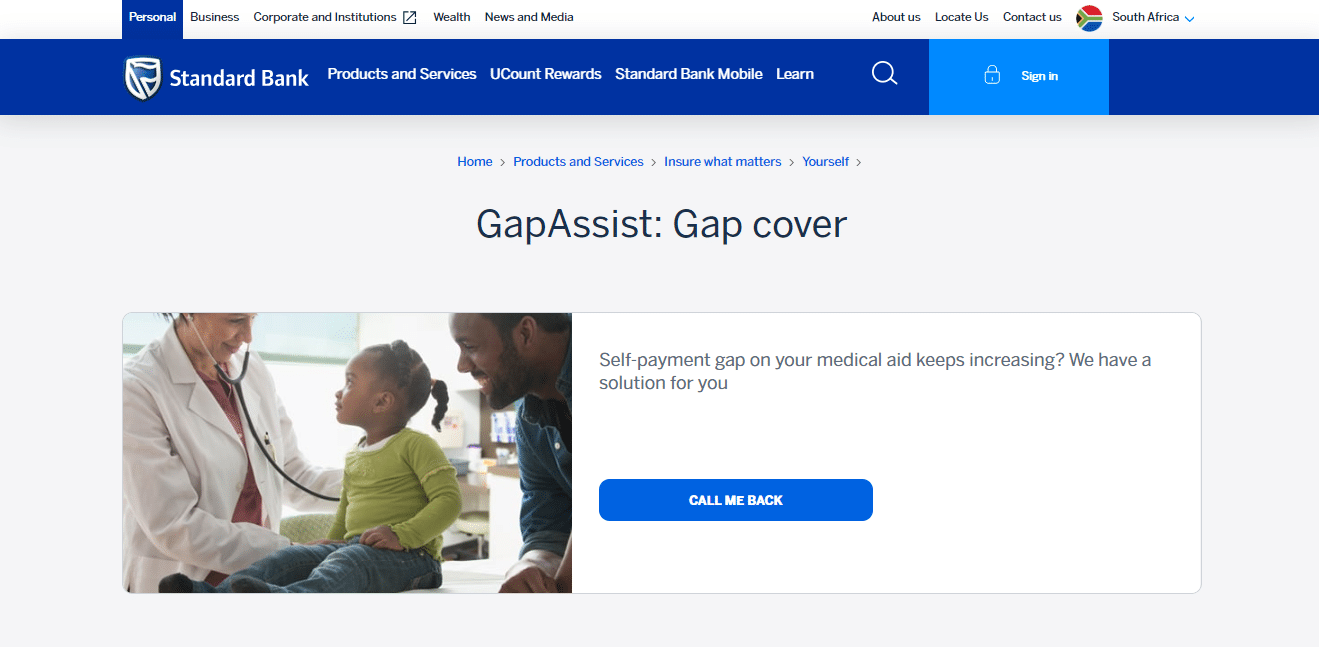
Standard Bank GapAssist is a medical gap cover that provides additional financial protection to cover the medical expenses not fully covered by your medical aid. Some of the features highlighted in the brochure include:
- ✅ Standard Bank GapAssist offers comprehensive cover that pays for the difference between the medical aid rates and the actual costs of medical treatments.
- ✅No co-payments or deductibles are associated with Standard Bank GapAssist, meaning you will not have to pay any additional fees when making a claim.
Unlike some other medical insurance products, there are no waiting periods associated with Standard Bank GapAssist, meaning you can claim immediately after taking out the policy (subject to terms, conditions, and approval).
The Pros and Cons of Medical Gap Cover
The Advantages of Gap Cover include:
- ✅ Medical gap cover provides additional financial protection to cover medical expenses not fully covered by your medical aid, allowing you to avoid unexpected out-of-pocket costs.
- ✅ Many medical gap cover policies provide access to a network of medical professionals who have agreed to accept the medical aid rates as full payment, meaning that you will not be required to pay any additional costs out of pocket.
- ✅ Medical gap cover policies typically do not include co-payments or deductibles, so you will not be required to pay additional fees when filing a claim.
- ✅Most medical gap cover policies do not impose annual limits on the amount claimed for medical procedures, so you can receive the care you require without worrying about exceeding a limit.
- ✅ Medical gap insurance typically offers comprehensive coverage for various medical treatments, such as hospital stays, surgery, and specialist consultations.
The Disadvantages of Gap Cover include:
- ❎ Medical gap cover policies can be complex, with various policy terms and conditions that must be understood to make an informed decision about coverage.
- ❎ Medical gap cover policies may have exclusions and waiting periods for certain medical treatments, meaning you may not be able to file a claim immediately after purchasing the policy or for certain medical conditions.
- ❎ Medical gap cover is not a replacement for medical insurance. Instead, it should be viewed as an additional layer of financial protection to cover the gaps in medical insurance coverage.
Medical gap cover policies require an additional monthly premium, which can increase your overall healthcare costs.

What Does Gap Cover, Cover?
In-Hospital Medical Expenses
Gap insurance can help cover the difference between what your medical aid covers and the actual cost of in-hospital medical care.
This can include hospital room and board, operating room fees, surgeon fees, anesthetist fees, pathology, radiology, and medication costs.
Furthermore, gap cover can help cover the additional costs that exceed your medical aid’s payment rate for these services, which can be substantial for certain medical procedures.
Outpatient Medical Expenses
Some gap cover policies can also cover the cost of outpatient treatments, such as consultations with medical specialists and diagnostic tests.
This can include the cost of consultations, tests, and scans performed in medical facilities and the cost of medication prescribed by a specialist. Again, outpatient gap insurance can help cover these costs that exceed your medical aid’s payment rate.
Co-Payments and Deductibles
Many medical aids require co-payments and deductibles for certain medical treatments, which can add to substantial costs over time.
Gap cover can help cover these additional costs. For instance, if your medical aid requires you to pay a certain amount for a procedure, gap cover can help cover that co-payment or deductible.
Prescribed Minimum Benefits (PMBs)
PMBs are defined medical conditions that all South African medical aids must fully cover.
However, the cost of treatment for these conditions may exceed what your medical aid covers; gap cover can help cover these additional costs. PMBs may include HIV/AIDS, certain forms of cancer, and mental health conditions.
Non-DSP Hospital Cover
Gap cover can cover Non-DSP (Designated Service Provider) hospitals through certain policies that offer benefits for treatments received at these facilities.
Non-DSP hospitals are typically more expensive than their DSP counterparts. Your medical aid may only cover a certain percentage of the costs. Gap cover can help cover the difference between what your medical aid covers and the actual cost of treatment received at a non-DSP hospital.
However, it is important to note that not all gap cover policies offer benefits for non-DSP hospital treatments. In addition, some policies may have exclusions for certain medical conditions or treatments received at non-DSP hospitals.
Additionally, gap cover may have waiting periods before certain benefits are activated.
Cancer Treatment and Chronic Medication
Cancer treatment and chronic medication can be expensive, and gap insurance can help cover the costs not covered by your medical aid.
For instance, gap cover can help cover the cost of chemotherapy and radiation therapy and the cost of medications used to manage chronic conditions such as diabetes and hypertension.
Furthermore, this can be especially important for those who require ongoing treatment for these conditions, as costs can quickly accumulate.
Internal Prostheses
Certain gap cover policies may provide benefits for the cost of internal prostheses, such as pacemakers, artificial joints, and implants. These benefits can help cover the difference between the cost of the prostheses and what your medical insurance covers.
Emergency or Trauma
Gap insurance can also cover the cost of emergency and trauma treatments. For instance, gap cover can help cover the costs that exceed your medical aid’s payment rate if you need emergency medical care due to an accident.
Furthermore, this can include the cost of emergency medical transportation, surgery, and hospitalization.

What will Gap Cover not Cover?
Gap cover providers in South Africa only cover treatments and procedures approved by your medical aid and performed by registered healthcare professionals. However, your gap cover does not cover any services not covered by your medical aid.
There are some exceptions to what gap cover can cover, including:
- ✅ Consultations before and following in-hospital treatment.
- ✅ Medication and disposable items in and out of the hospital.
- ✅ Crutches and wheelchairs.
- ✅Private or home nursing step-down facilities, including frail care.
- ✅ Treatment for depression and other mental health disorders in a non-DSP facility.
- ✅ Any procedure is subject to a waiting period.
Finally, Claims older than six months and Allied service providers.

Who Needs Gap Cover?
Gap Cover for Individuals and Families
Gap cover is an especially valuable option for individuals and families who may not have substantial savings or other resources to cover medical costs beyond what their medical aid covers.
Even with a comprehensive medical aid plan, individuals and families may face high out-of-pocket costs for procedures or treatments not fully covered by their scheme.
Therefore, gap cover can help alleviate these financial burdens and ensure that individuals and families have access to the necessary medical treatments.
Gap Cover for High-Risk Occupations
Gap cover may be particularly beneficial for individuals working in high-risk occupations, such as construction or mining, where the risk of injury or illness is higher than average.
These individuals may be more likely to require expensive medical treatments or procedures not fully covered by their medical aid scheme.
Therefore, gap cover can provide additional protection for these individuals and help ensure they are not financially devastated by unexpected medical costs.
Gap Cover for Retirees
Retirees may find gap cover a valuable option, as they may be more likely to require medical treatments or procedures as they age.
Additionally, retirees may have limited income or savings to cover unexpected medical costs, making gap cover a valuable tool for protecting their financial well-being.

How to Choose the Right Gap Cover Plan
Understanding the Different Types of Gap Cover Plans
There are many types of gap cover plans on the market, each with its features and benefits, making it difficult to choose the right one. To make an informed decision, it is necessary first to comprehend the various gap cover plan options.
The following are the most typical types of gap cover plans:
- ✅ Basic Gap Cover is a plan that provides limited cover for in-hospital medical expenses not covered by your medical aid scheme. Basic gap cover plans typically have lower premiums than comprehensive plans but offer fewer benefits.
- ✅ Comprehensive Gap Cover is a type of plan that provides more extensive cover for in-hospital medical expenses, as well as certain outpatient expenses and co-payments. Comprehensive gap cover plans typically have higher premiums than basic plans, but they also provide more comprehensive gap cover.
- ✅ Top-up Gap Cover is a type of plan intended to supplement the cover provided by your medical aid scheme, especially for expensive procedures or treatments. Individuals with a comprehensive medical aid plan but desire additional protection against high medical costs may benefit from top-up gap cover plans.
Disease-specific gap Coverage is a type of plan that provides coverage for specific medical conditions or treatments, such as cancer treatment or chronic medication. Individuals with a higher risk of developing certain medical conditions or requiring ongoing treatment for a specific condition may benefit from disease-specific gap cover plans.
Evaluating Your Healthcare Needs
Choosing the right gap cover plan requires a careful evaluation of your healthcare needs, as well as your budget and personal circumstances. Here are some key factors to consider when evaluating your healthcare needs:
- ✅ Start by reviewing the cover provided by your medical aid plan, including any co-payments or deductibles that you may be responsible for. This can help you to identify any potential gaps in cover that may need to be addressed by a gap cover plan.
- ✅ Consider your health history and any ongoing medical conditions or treatments you may require. This can help you to identify any specific benefits or cover options that may be important for your healthcare needs.
- ✅ Gap cover plans vary widely in terms of premiums and cover levels, so it is important to consider your budget when selecting a plan. Look for a plan that provides the cover you need at a price that is affordable for you.
- ✅ If you have dependents or family members who rely on your medical aid cover, consider their healthcare needs when selecting a gap cover plan. Look for a plan that provides comprehensive cover for your entire family, including any children or elderly relatives.
If you work in a high-risk occupation, such as construction or mining, you may be more likely to require medical treatment for work-related injuries. Look for a plan that covers emergency and trauma treatment and any other benefits that may be relevant to your occupation.
Comparing Gap Cover Providers
When seeking medical gap coverage in South Africa, it is important to compare gap cover providers to ensure that you are getting the best possible coverage at an affordable price. Here are some reasons why and how to compare gap cover providers:
- ✅ The benefits and cover offered by various gap cover providers vary.
- ✅ Depending on the provider and the level of coverage you select, gap insurance premiums can range widely.
- ✅ Gap cover plans frequently have to wait periods before they start to provide cover.
- ✅ The gap cover you receive may depend on the network of healthcare providers that some gap cover providers work with.
Researching the various providers and their services is the first step in comparing gap cover providers.
Examine their provider network, premiums, waiting times, and coverage and benefits. Once you have whittled down your list of potential providers, getting quotes from each one is a promising idea to compare costs and the areas they cover.
In addition, you can learn about other people’s experiences with the service provider by reading reviews written by current and former clients.
Gap Cover Benefits
Because each medical aid gap cover plan will have different benefits, it is critical to compare the benefits provided by each plan. Look for plans that cover co-payments, excess payments, and out-of-hospital expenses.
Furthermore, some plans may also include services such as counseling or emergency medical transportation.
Customer Support
When comparing medical aid gap cover options, you must consider each provider’s customer service. Look for companies with a good reputation for customer service, quick response times, and friendly staff.
Moreover, by doing this, you will know you can count on your provider to answer your questions and resolve any problems.
Ensure they are FSB-registered
Choosing a gap cover registered with the Financial Services Board (FSB) is crucial in South Africa. The Financial Services Board (FSB) is the government agency in South Africa in charge of regulating the gap cover industry. Therefore, you should select FSB-approved gap insurance for these reasons:
- ✅ You can rest assured that any gap cover provider that is FSB-registered will adhere to lofty standards of openness and accountability and will not engage in any dishonest or unethical business dealings with you.
- ✅ Gap cover providers with FSB registration must follow all applicable laws and regulations.
- ✅ Gap cover providers that are members of the FSB must have a system for handling customer complaints. This means that if you have a problem or concern, it will be resolved quickly and effectively.
- ✅ Financial stability is a requirement for FSB-registered gap cover providers. This indicates that they have the money to cover claims when they arise.
- ✅ You can rest assured that you are dealing with a reputable and trustworthy business if you choose a gap cover provider registered with the Financial Services Board (FSB).
View their Credit Rating
There are many reasons why it is preferable to work with a gap cover provider that either carries its own Global Credit Rating (GCR) or is underwritten by an entity that does.
- ✅ GCR ratings offer an unbiased assessment of a company’s financial strength, which is crucial when selecting a gap cover provider. A higher rating indicates that the company is financially sound and less likely to run into trouble in the future.
- ✅ GCR ratings also evaluate a company’s capacity to pay claims, which is crucial when making a claim. A higher rating suggests that the business is more likely to have the means to settle claims promptly and effectively.
- ✅ A GCR rating offers an unbiased evaluation of a company’s creditworthiness, which raises the company’s overall credibility.
- ✅ Choosing a gap cover provider with a GCR rating or underwritten by a company with a GCR rating adds an extra layer of security for policyholders. A higher GCR rating indicates that policyholders are more likely to be protected if the provider experiences financial difficulties.
- ✅ Choosing a gap cover provider with a GCR rating or underwritten by an entity with a GCR rating can give you peace of mind knowing that you are working with a company that has been independently evaluated for its financial strength and claims-paying ability.
Cost Considerations
When comparing gap cover options, the cost of premiums is a crucial factor. Premiums can vary significantly between providers, so shopping around and comparing prices is essential.
However, it is important to remember that the least expensive option is not always the best one. Before deciding, consider the plan’s coverage and benefits.
Waiting Periods
Gap cover plans often have waiting periods before providing cover for medical expenses. Depending on the plan, waiting periods can range from several months to a year.
Therefore, you must fully understand each plan’s waiting period to ensure you can access the cover you need when you need it.
Maximum Rate of Cover
When evaluating gap cover options for yourself and your family, the maximum rate is crucial. This percentage represents the amount of the shortfall that your gap cover provider is willing to cover if your medical scheme does not cover all medical expenses.
Furthermore, different gap cover plans offer varying maximum rates that increase with higher monthly premiums for additional cover. As the maximum rate increases, so do the cover benefits in proportion to the higher rates.

How Much Does Gap Cover Cost in South Africa?
Gap cover premiums in South Africa can vary depending on various factors, including the provider, the level of cover selected, the age and health status of the insured individual or family, and any pre-existing medical conditions.
Here are some factors to consider when looking at the cost of gap cover:
- ✅ Age of the policyholder and any dependents covered under the policy.
- ✅ The level of cover selected, including the maximum rate percentage.
- ✅ Pre-existing medical conditions and any associated risks.
- ✅ The gap cover provider and their pricing model.
- ✅ Any additional benefits included in the policy, such as cover for chronic medication or cancer treatment.
The Average Cost of Gap Cover in South Africa
On average, gap cover premiums in South Africa can range from R200 to R1,500 per month, depending on numerous factors. Premiums may also increase annually due to inflation, changes in the maximum rate percentage, or other factors.
How to Save Money on Gap Cover Premiums
Here are a few ways to save money on your Gap Cover Premiums:
- ✅ Choose a provider with a pricing model that fits your budget and needs.
- ✅ Consider a higher excess or co-payment option to reduce the premium cost.
- ✅ Choose a basic level of cover that still provides sufficient protection.
- ✅ Choose a provider that offers discounts for families or for paying annually instead of monthly.
Review and compare quotes from multiple providers to find the most affordable option.

How to Make a Claim on Gap Cover?
The Claim Process for Gap Cover Insurance
You should adhere to the instructions provided by your specific provider when filing a claim for gap cover insurance in South Africa. Here are some general guidelines:
- ✅ Notify your gap cover provider as soon as possible after receiving a medical bill above what your medical aid will cover.
- ✅ Your gap cover provider will require the medical bill, your medical aid’s explanation of benefits (EOB), and any other relevant paperwork. To prevent any delays in the claims process, be sure to submit all required paperwork.
- ✅ Your gap cover provider will review your claim and let you know if it has been accepted or denied. In addition, they will tell you how much they will cover and when you can expect payment if accepted.
Once your claim is approved, your gap cover provider will pay the agreed-upon amount directly to you or the healthcare provider, depending on the provider’s policies.
Documents Required for Claiming Gap Cover
When claiming from your Gap Cover Provider, you must submit the following documents:
- ✅ A completed claim form is available upon request.
- ✅ Detailed copies of all pertinent doctor’s accounts or a legible copy of the hospital account.
- ✅ A detailed Medical Scheme claims statement indicates the relevant accounts’ processing and payment.
- ✅ A copy of your Medical Scheme Authorization confirmation.
- ✅ A copy of your Medical Scheme Membership Certificate.
Tips for a Smooth Gap Cover Claim
Here are a few tips to ensure that your gap cover claim proceeds smoothly:
- ✅ Before filing a claim, familiarise yourself with the terms and conditions of your gap cover policy.
- ✅ Keep your medical aid and gap cover policy information current and let your gap cover provider know of any changes.
- ✅ Verify that your gap cover policy covers the medical procedure and has been approved by your medical aid.
- ✅ Keep all bills and receipts associated with the medical procedure.
- ✅ To prevent any delays, submit your claim as soon as possible.
- ✅ Follow the claims process outlined by your gap cover provider and submit all required paperwork.
- ✅ Verify that your claim form has included all the required information.
- ✅ Be patient, as it might take some time for your claim to be processed, especially if there are complications or disputes with your medical aid.
- ✅ Track the status of your claim and address any problems as they arise by following up on them regularly.
Contact your gap cover provider immediately if you have any questions or concerns about your claim.

What to Look for in a Gap Cover Provider?
The Reputation of the Provider
A gap cover provider’s record of accomplishment can tell you a lot about the quality of their services and products.
For example, reputable service providers are known for their promptness in processing claims, the clarity of their customer communications, and the quality of their support staff.
In contrast, a gap cover provider with a bad reputation may have a history of rejecting or delaying claims, giving clients conflicting or incomplete information, and providing poor customer service. Frustration, monetary loss, and a poor impression of the service provider are all outcomes.
The Level of Customer Service
When searching for a gap cover provider, customer service quality is crucial for many reasons:
- ✅ A gap cover company with great customer service will have a staff of experts ready to help you with your claim. They can assist you in resolving any problems that may arise, answer any questions you may have, and advise you on the appropriate paperwork to submit.
- ✅ Effective claims processing is a top priority for any service provider. They will do their best to process your claim as soon as possible so that you can get the coverage you need.
- ✅ Strong customer service providers will be open and honest about their policies, terms, and conditions. They will take the time to explain any jargon or muddled terms and be honest about any restrictions.
- ✅ A provider with good customer service will treat you like a person, not just another policyholder. They will listen carefully to determine your needs and then provide tailored services.
- ✅ Your gap cover provider will gain your trust and confidence if they provide excellent customer service. You want to know that your provider will be there for you when you need them most and that they will provide the cover they commit to.
The Range of Benefits Offered
Make sure your gap-cover provider has your best interests in mind. Your provider needs to ensure that everything they do is customized to meet the needs of their customers. Your provider should also communicate with its broker network and pay attention to its customers.
This will allow it to offer its policyholders the best service and products. A thorough review is warranted to ensure that the benefits provided by medical schemes and gap-cover providers are meaningful and actually used.
You can get the most bang for your buck if you tailor your gap cover to fill in the gaps left by your existing health insurance and avoid paying for extras you will not use.
The Provider’s Financial Strength
A gap cover a provider’s financial stability is crucial when selecting a provider because it reflects the provider’s capacity to pay out claims.
You can have confidence that your claims will be processed quickly and fairly by selecting a gap cover provider with a solid record of paying out claims.
A financially stable service provider is also more likely to be able to offer its customers benefits like round-the-clock customer service and claims assistance.
Furthermore, customers are vulnerable and could experience financial hardships in the event of a claim if their provider is not financially stable and unable to meet its obligations to policyholders.
Therefore, to make a wise and informed decision, you should look into the financial stability of any gap cover provider you are considering.
Other notable considerations:
Consider the following when selecting a gap cover provider in addition to the earlier mentioned factors, including FSB registration, GCR rating, customer service, and financial strength:
- ✅ Find a gap cover provider with affordable, flexible options that meet your requirements. To find the right plan for you, it is important to weigh the pros and cons of assorted options.
- ✅ Before selecting a gap cover provider, carefully review each plan’s exclusions and limitations. Some policies might have more restrictions or exclusions than others.
- ✅ Check out the gap cover provider’s claims process to see how simple and quick it is to make a claim. Look for companies that allow you to submit claims online or from your mobile device and have a simple process.
- ✅ Before committing to a plan, knowing how long you will have to wait before receiving cover is important.
- ✅ Check the policy’s renewal terms, including any changes to premiums, benefits, and terms and conditions.
- ✅ Some gap cover companies also include extras like wellness programs and loyalty rewards. When selecting a provider, consider how important these features are to you.
- ✅ Check the gap cover provider’s provider network to ensure you have access to the care you require.
Finally, Look for a gap cover provider who is open about their services and costs. Before committing to a policy, ensure you know all the associated costs and terms and conditions.

In Conclusion
Overall, medical expenses in South Africa are costly, even with medical aid. Gap Cover is a supplementary insurance policy that can help bridge the gap between what medical aid covers and what you pay out of pocket.
You might also like: the 5 Best Gap Cover Options for Under R200
You might also like: Top 10 GAP covers available in South Africa
You might also like: the 5 Best Gap Cover Options for Under R300
You might also like: Best Gap Cover with No Waiting Period
You might also like: 5 Best Medical Aid with Immediate Cover (No Waiting Period)
You might also like: 5 Best Hospital Plans for Foreigners in South Africa
Frequently Asked Questions
Is Gap Cover Worth the Cost?
Whether or not gap cover is worth the cost depends on each individual’s circumstances and needs. If you have a medical aid plan with significant co-payments, deductibles, or exclusions, gap cover may be a valuable investment to provide additional financial protection.
What drawbacks do gap cover insurance have?
The main drawbacks of gap cover insurance include that it is expensive, depending on the type of coverage and the provider, and co-payment may still not cover the full cost of medical services, so you may still need to pay out-of-pocket expenses. Lastly, it does not cover services that are not medically necessary, such as cosmetic procedures.
Is Gap Cover the Same as Medical Aid?
No, gap cover is different from medical aid. Gap cover is a supplemental insurance product that offers additional coverage for medical costs not covered in full by your medical aid plan. Furthermore, medical aid covers the costs of medical treatment and services. However, gap cover covers the shortfall between what your medical aid covers and the actual cost of treatment.
Can I get a Gap Cover if I am not a South African citizen?
Yes, some Gap Cover providers offer cover to non-South African citizens with valid South African medical aid.
Can I Get Gap Cover if I Have a Pre-Existing Condition?
Yes, you can still get gap coverage if you have a pre-existing condition. However, some gap cover providers may have waiting periods or exclusions for certain pre-existing conditions. Therefore, you must review the terms and conditions of the gap cover policy carefully before signing up to ensure that it meets your needs.
Can I change my Gap Cover provider?
Yes, you can switch to a different Gap Cover provider at any time but be aware of any waiting periods that may apply.
Is Gap Cover tax deductible?
Yes, Gap Cover premiums are tax deductible, subject to certain limits and conditions.
What Is the Waiting Period for Gap Cover?
The waiting period for gap cover varies depending on the provider and the plan. Some gap cover providers may have waiting periods of a few months to a year before cover begins.
How Long Can I Keep My Gap Cover Policy?
You can keep your gap cover policy as long as you continue to pay your premiums and the policy remains in effect. However, some gap cover providers may have age restrictions or limitations on how long you can be covered.